
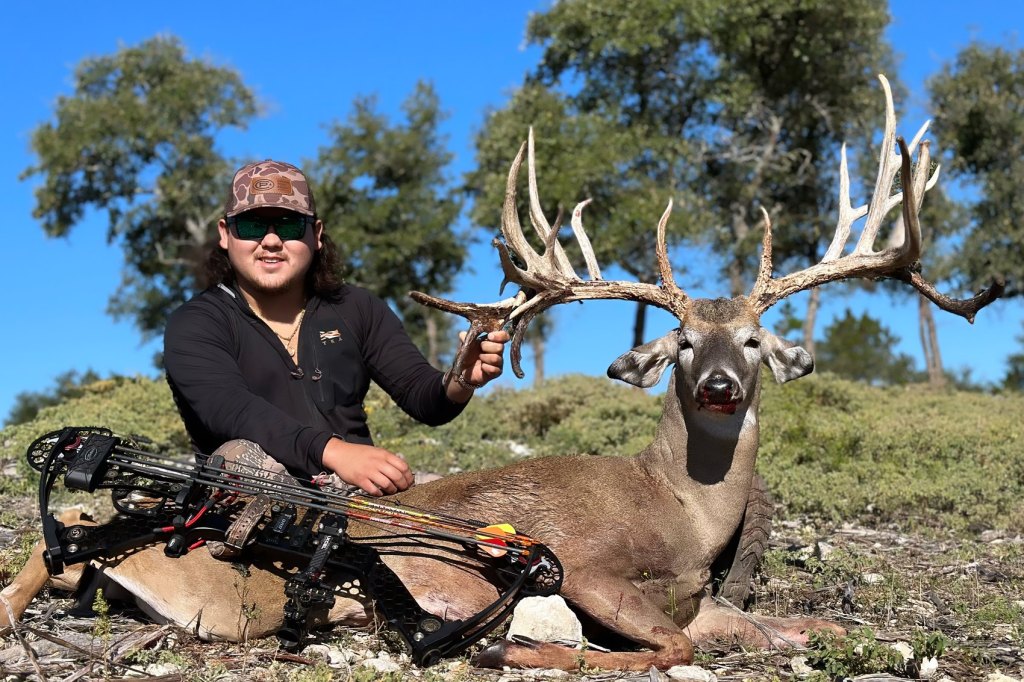


We get a version of this call most weeks. Somebody has bought land, or is about to, and wants to know what happens next. There is a lot of information out there about individual pieces of it and almost nothing that lays out the whole sequence in order.
So here is the whole sequence, in the order you actually face it. Each step links to a deeper guide where we have written one, and where the answer depends on your property rather than ours, we say so instead of guessing.
1. Decide what the place is for
This sounds soft. It is the decision that determines every number that follows.
- A hunting ranch. You want to hunt good deer on your own ground, for yourself and your people. Most of our clients. Weight the money toward does and a few stockers, and think in five-year terms.
- A breeding operation. You intend to sell deer or semen. Different infrastructure entirely — pens, handling facilities, records, permits — and a different animal purchase.
- Both. Common, and workable, but do not drift into it by accident. Pick it deliberately and build for it.
2. Find out what your ground will carry
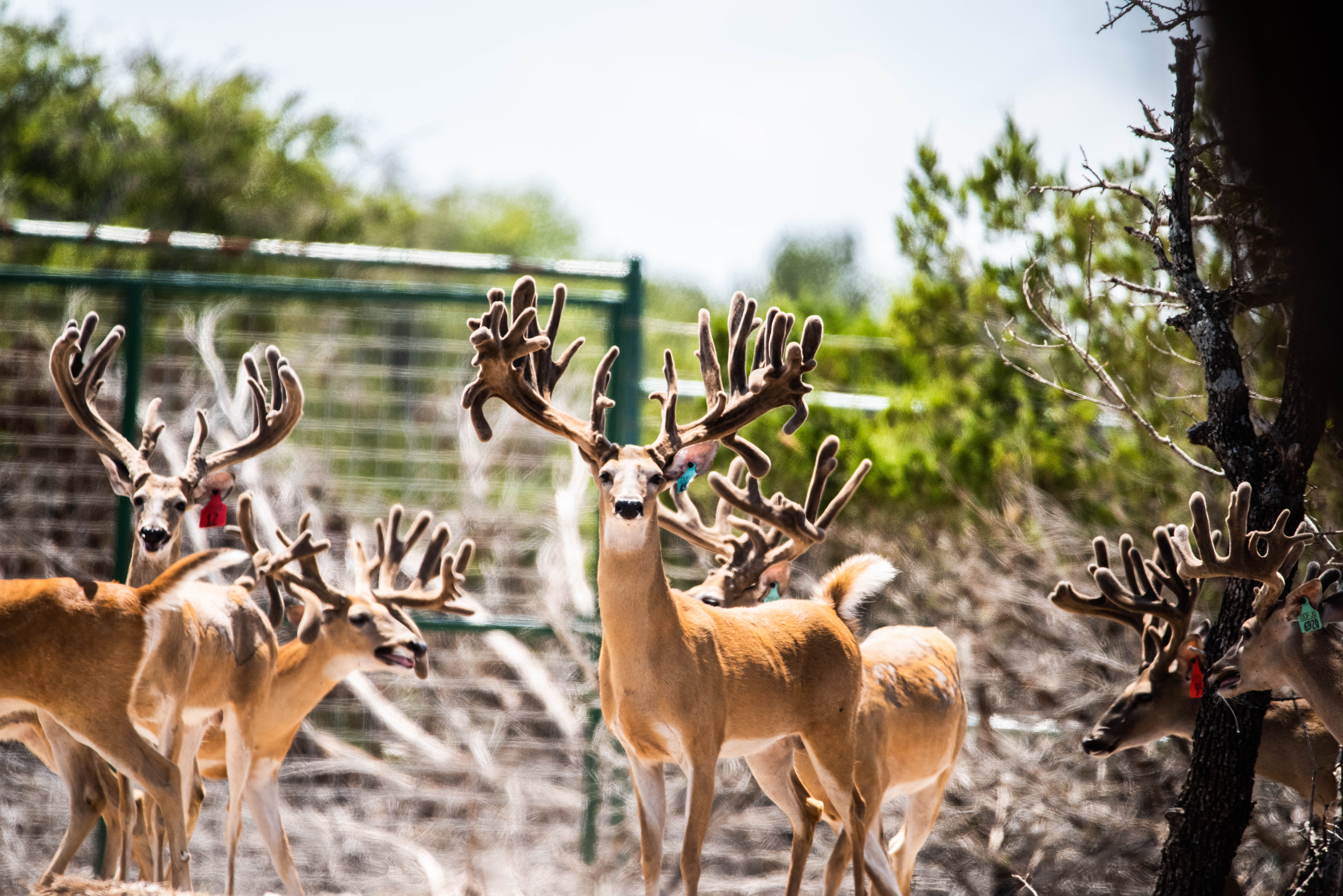
Before acreage becomes a herd size, somebody who knows range needs to look at your browse. A fenced and fed property carries far more deer than the same dirt would hold wild — commonly a deer per six to twelve acres against twenty to fifty on unmanaged native range — but the spread is wide and it depends on your rainfall, your soil and whether cattle are eating the same forage.
Get a browse survey. Count the native deer already inside your fence, because they count against your capacity. Then stock at roughly a third of what the place will hold, so the herd has room to grow into it.
Full detail, with an acreage table: How many deer do you need to start a high-fence herd?
3. Build the fence and the infrastructure
We do not sell fence and we are not going to pretend to quote it. What we will tell you, from watching a lot of ranches do this, is what matters:
- The fence is only as good as its worst hundred feet. Terrain, creek crossings and gates are where deer get out. Budget for the hard parts, not the average foot.
- Water in every pasture. Deer will not use ground they cannot drink on, so half your acreage is decorative if the water is all in one corner.
- Build a handling setup before you need one. The first time you have to catch a deer for a health check or a tag, you will find out whether you can. Sorting this out afterwards is miserable.
- Feeders and blinds are cheap and get changed. Fence, water and pens are expensive and permanent. Spend your planning time on the permanent things.
4. Understand the paperwork before you buy a deer
Moving whitetails in Texas is regulated, and it is regulated for good reason. Permits, release site requirements, movement documentation and CWD testing obligations are set by Texas Parks and Wildlife and the Texas Animal Health Commission, and they change from season to season.
We are not going to publish current rules on a sales page, because a rule that is wrong is worse than no rule at all. What we will do is tell you plainly that this step comes before the fun part, that your release site needs to be sorted before animals move, and that any breeder worth buying from will have their own testing and records in order and will show them to you. Ask us for ours.
How we handle the health and compliance side: Herd Health. Confirm the rules themselves with TPWD directly.
5. Build the budget
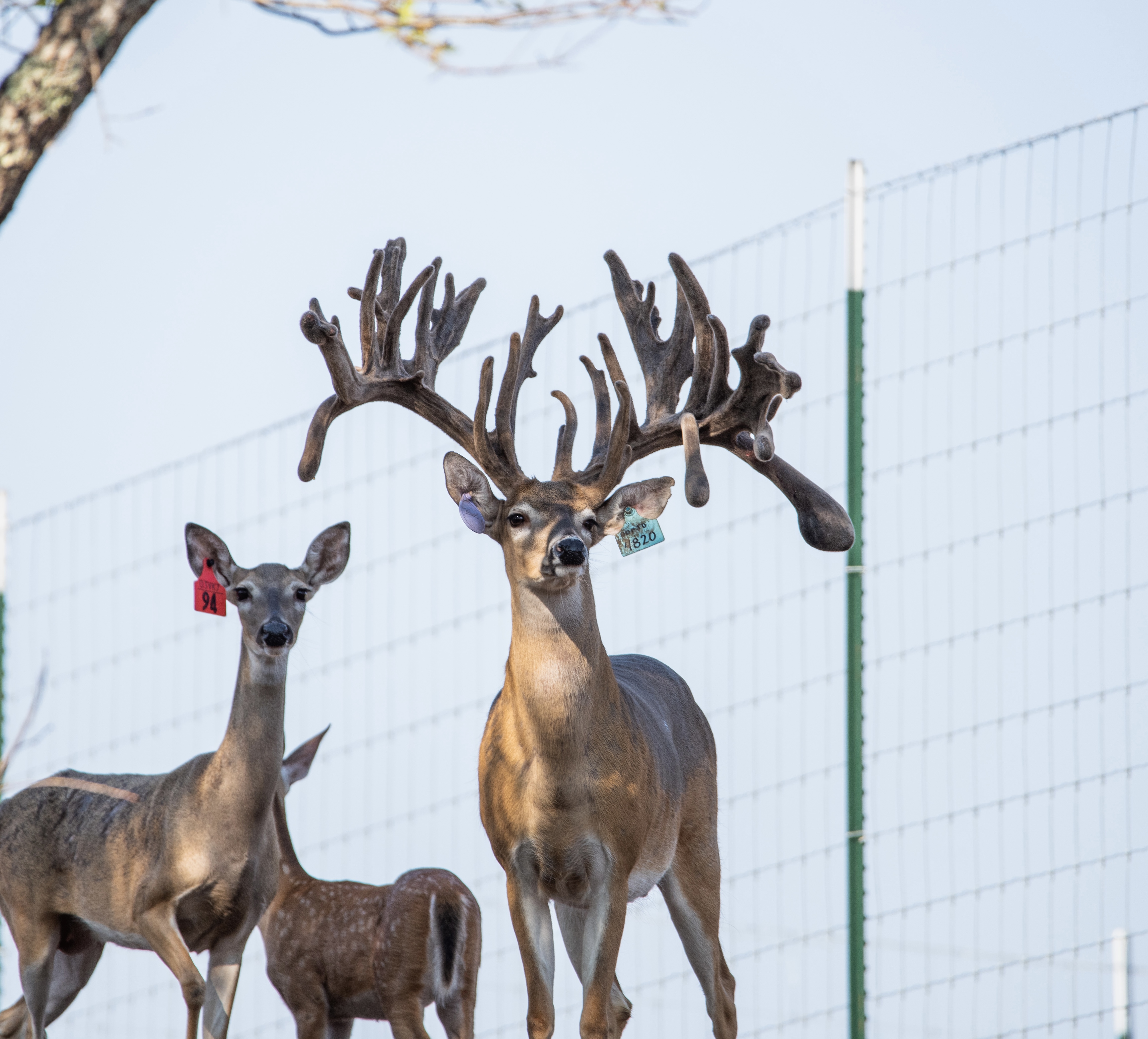
Four buckets: the animals, the hauling, the infrastructure, and the annual feed bill. We publish the first two. The other two are yours, and the fourth is the one that surprises people, because it arrives every year after the exciting part is over.
A foundation herd of bred does and a couple of stocker bucks starts in the neighborhood of $40,000 and runs to $80,000 or more for a substantial one, before fence and feed.
Full pricing and a worked example: What it actually costs to stock a high-fence ranch in Texas
6. Buy the right animals
Three purchases, three different jobs:
| What | What it does | Price |
|---|---|---|
| Live bred does | Builds the herd. Fawns her first spring on your place. | From $3,750 |
| Stocker bucks | Something to hunt now, or to grow out for four years. | $6,500–$8,750 |
| Breeder bucks | A sire of your own on the place. | By inquiry |
Two things we tell every first-time buyer. Buy more does than instinct suggests — a stocker buck is one hunt, a doe produces for the better part of a decade. And buy bred does, not open yearlings, because the cheaper animal costs you a full season of production and pushes every date on your timeline to the right.
If your fence is not finished yet, you do not have to sit out a breeding season. The Jumpstart Program boards your does with us at $125 per deer per month and they breed here on schedule.
7. Get them there without wrecking them
A deer that arrives stressed does not settle, and a doe that does not settle may not hold. We haul in a blacked-out, air-conditioned trailer at $3 per loaded mile, free over $25,000. This is not the line item to economise on, whoever you buy from. More on the transport page.
8. Feed like you mean it
Genetics set the ceiling. Nutrition decides how close you get to it. A pen of well-bred deer on inadequate feed will disappoint you and it will look like you bought the wrong deer.
We will not publish a feed budget for your property, because it depends on your forage, your rainfall, your density and how hard you are pushing. What we will say is that the ranches which get results treat protein as fixed overhead rather than something to trim in a dry year — and that a year of thin feed costs you an age class you cannot buy back.
9. Hold your harvest discipline
This is the free one, and it is the one most ranches get wrong. A buck shot at three and a half never becomes the deer he would have been at four and a half, and no amount of genetics or feed fixes a place that shoots its best young bucks every November.
Write your rules down in the summer, when nobody is looking at a deer through a scope. Decide the minimum age, tell everybody who hunts the place, and hold it.
10. Improve the herd from here
Once the herd is established, the work shifts from buying deer to improving the ones you have. Two levers matter.
Bring in outside genetics on a schedule. Run one buck over a closed herd for several seasons and he will be covering his own daughters. Plan sire rotation from the start; it is far cheaper than fixing it later.
Breed above your budget. The best sire you can afford to own is rarely the best sire you can breed to. Semen from our AI sires puts genetics in your fawn crop that would cost six figures to own outright, with no animal to feed, house or insure.
The realistic timeline
| Season | Where you are |
|---|---|
| Year 1 | Fence closed, bred does released, first fawns on the ground. A stocker buck to hunt if you want one. |
| Year 3 | Herd compounding. Your original stockers are mature. Real hunting on bought deer. |
| Year 5 | First mature buck you raised yourself. |
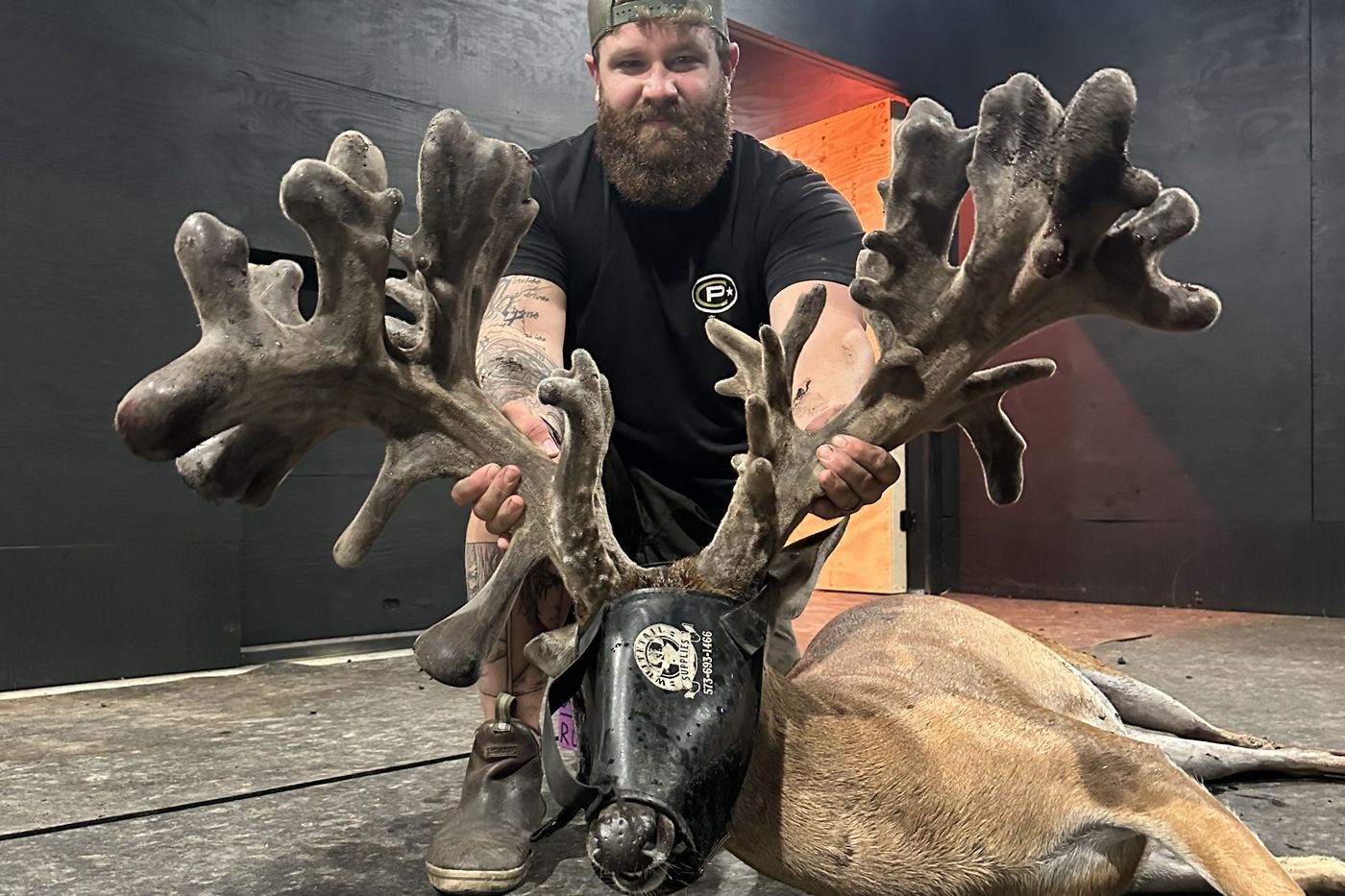
| Year 6+ | Self-sustaining. A mature age class every season without buying another animal. |
Where to start
If you are early enough that the fence is not up, start with the carrying-capacity question and the permit question, in that order. If the fence is up and you are ready to buy, start with a real number for what your acreage should hold and work backwards from the season you want to be hunting mature deer.
Either way, call 714-388-7020 and tell us your acreage and your timeline. If what you need is not something we sell, we will tell you that instead of selling you something else. You can see what our genetics have produced on the results page.
 Crown Point Whitetails
Leave a comment