
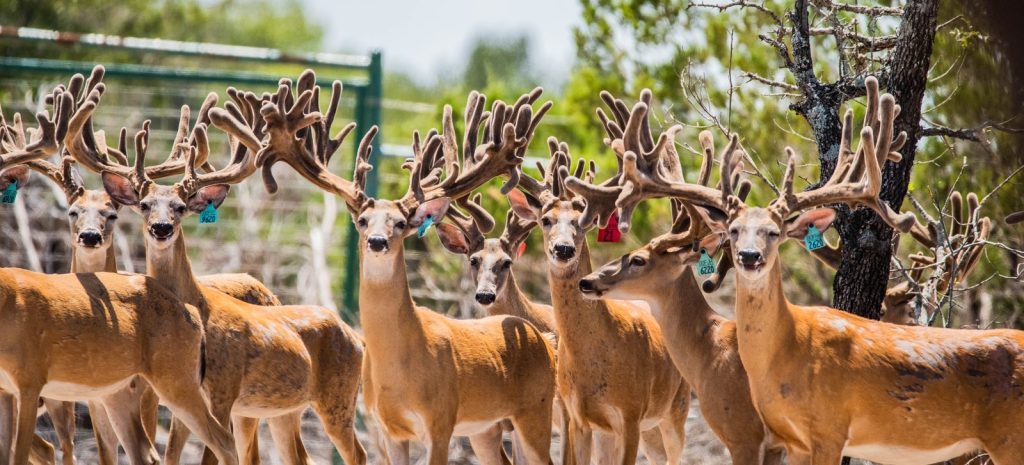


If you have searched this question, you already know the problem: almost nobody will answer it in public. You find phone numbers and photographs of big deer, and you find out what things cost only after you have spent an afternoon on the phone with someone who wants to qualify you first.
We publish our pricing, so we may as well publish the math. Below is what stocking a ranch actually costs, using our real numbers, plus honest notes on the parts that depend entirely on your property and that nobody can quote you sight unseen.
The four buckets
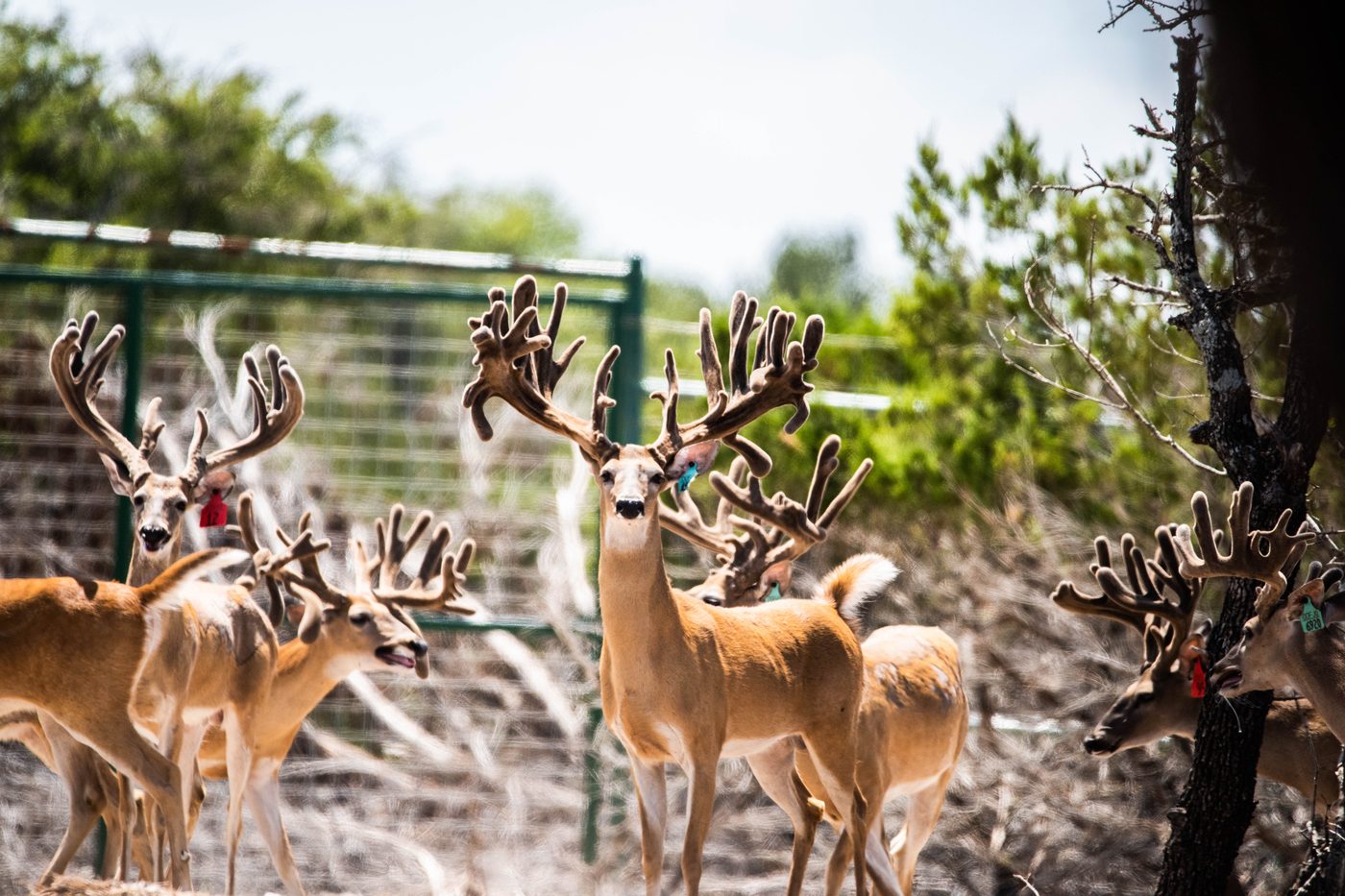
Every stocking budget breaks into four parts, and only two of them are ours:
- The animals. Published, predictable, and the part we can quote you today.
- Getting them there. Also published, and it scales with distance.
- Infrastructure. Fence, gates, pens, water, feeders. Entirely dependent on your acreage and terrain. Not our lane, and anybody who quotes this without walking your property is guessing.
- Ongoing feed and management. The bucket most first-time buyers underestimate, because it arrives after the exciting part is over.
This post covers buckets one and two with real figures, and tells you what drives three and four so you can budget for them properly.
What the animals cost
Our current pricing, the same numbers that are on our sales pages:
| What you are buying | Price |
|---|---|
| Live bred does | From $3,750 |
| Yearling open does | From $2,500 |
| Stocker bucks, scored under 200″ | $6,500 |
| Stocker bucks, scored 200″–250″ | $7,500 |
| Stocker bucks, scored 250″+ | $8,750 |
| Breeder bucks | By inquiry |
Three things to understand about that table before you start multiplying.
If you are stocking a ranch, budget for bred does. A live bred doe at $3,750 is already carrying and fawns the first spring she is on your place. A yearling open doe at $2,500 is about a year old and not carrying — she breeds in the fall as a coming two-year-old and drops her first fawns the spring after that, so she is producing in her second season with you rather than her first. The cheaper animal is the more expensive decision for most ranch buyers, because you feed her for a year to reach the point the bred doe was at the day she stepped off the trailer. Open yearlings suit a breeder pen where you want to pick the sire yourself, or a place whose fence is a year out anyway.
Bucks and does do completely different jobs. A stocker buck is something to hunt, this season or the next. A doe is a factory. If you buy nothing but bucks you have bought a few good hunts and no herd. If you buy nothing but does you have a herd and nothing to shoot for several years. Almost every new ranch needs some of both, weighted toward does more heavily than instinct suggests.
Score tiers are about the animal, not the paperwork. A buck in the 250″+ tier costs $2,250 more than one under 200″. Whether that is worth it depends on whether you are stocking to hunt now or to improve what your pasture produces in five years.
A worked example
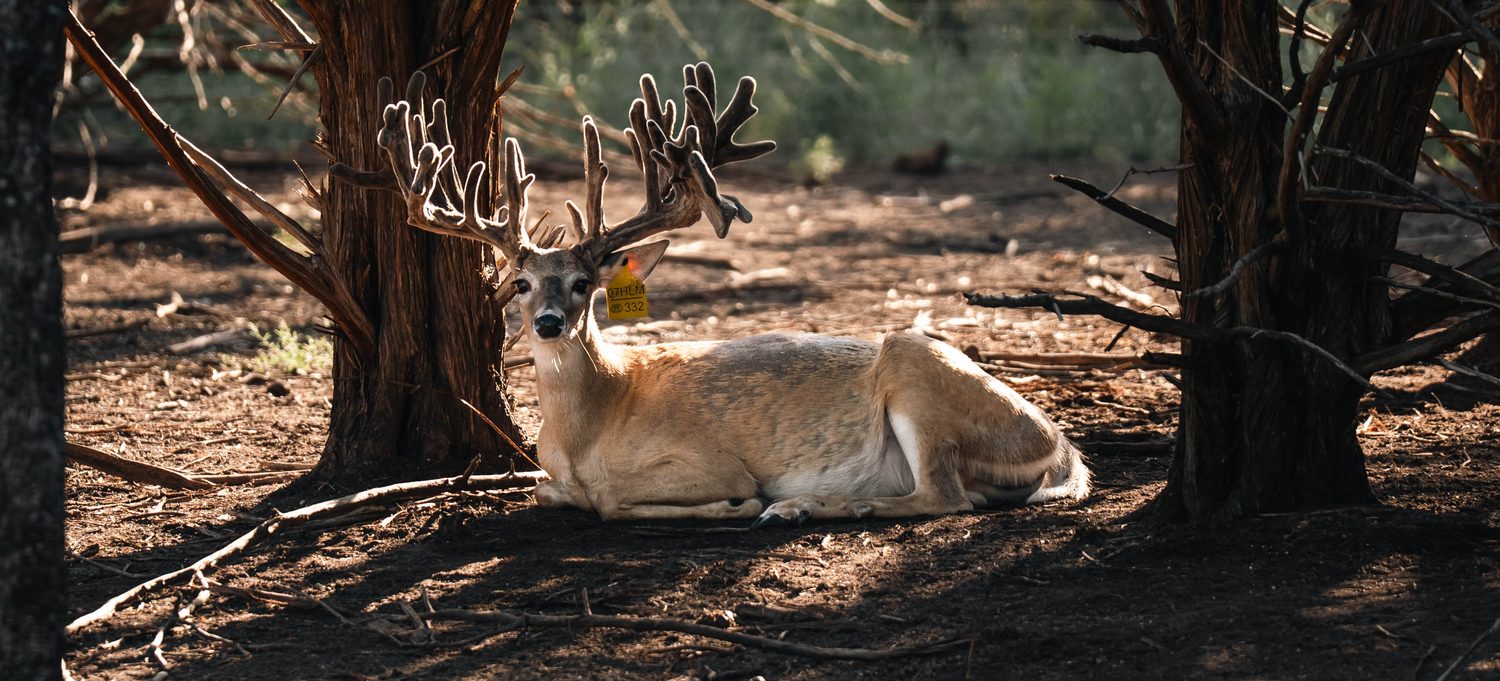
Here is a foundation herd for a ranch that wants to start producing its own deer and still have something to hunt in the meantime. Twenty live bred does and two mid-tier stocker bucks:
| 20 live bred does at $3,750 | $75,000 |
| 2 stocker bucks, 200″–250″, at $7,500 | $15,000 |
| Subtotal | $90,000 |
| Less 10% cash discount | −$9,000 |
| Delivery (free over $25,000) | $0 |
| Total | $81,000 |
Those does fawn out their first spring on your place, so you are building a herd from the first season. The same twenty head as yearling open does would run $58,500 all in after the cash discount — about $22,500 cheaper, and a full year later to your first fawn crop. For most people putting deer on a finished ranch, that year is worth more than the money.
Scale it down and the same logic holds. Ten bred does and one buck runs $45,000 before the cash discount. Scale it up and the per-animal price does not change, because our pricing does not move based on how badly we think you want it.
Getting them to your place
We haul in a blacked-out, air-conditioned trailer at $3 per loaded mile, and delivery is free on orders over $25,000. Most foundation herds clear that threshold, which means transport is often a line item that reads zero.
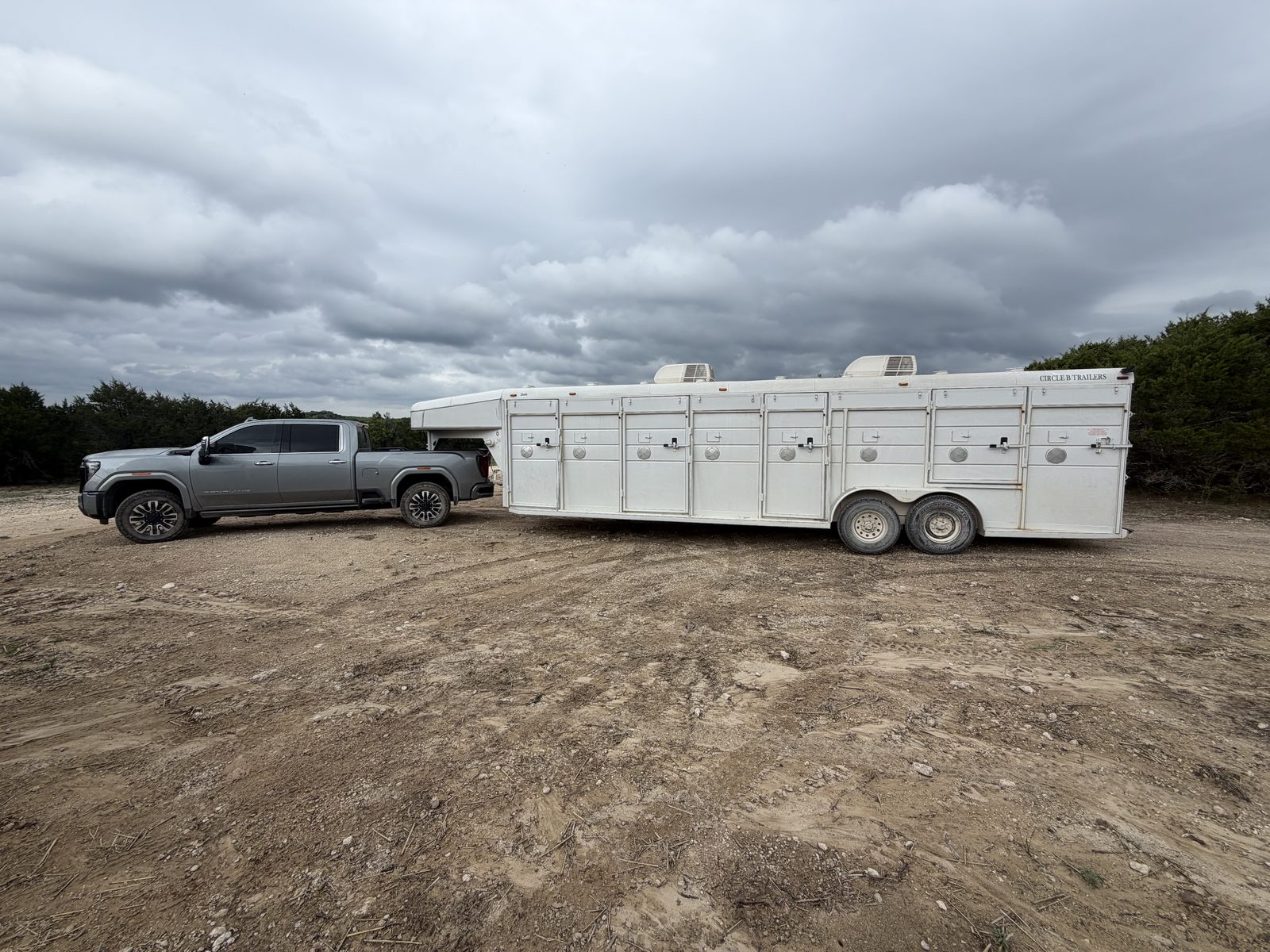
Worth knowing why the trailer matters: a deer that arrives stressed does not settle, and that goes double for a doe carrying fawns. Hauling is not the place to save a few hundred dollars. More on how we move animals on the transport page.
The bucket nobody budgets for
Feed and management. Genetics set the ceiling; nutrition decides how close you get to it. A pen of well-bred deer on inadequate feed will disappoint you, and it will look like you bought the wrong deer when you did not.
We are not going to publish a feed budget for your property, because it depends on your forage, your rainfall, your stocking density and how hard you are pushing for antler. What we will tell you is that it is a recurring annual number of real size, and that the ranches which get results treat it as fixed overhead rather than something to trim in a dry year.
If the timeline is the problem
The gap between closing on land and harvesting a mature buck off it is the real cost most people miss. If your fence and infrastructure are not finished, you can buy does now and board them with us at $125 per deer per month while your place comes together. They live and breed in our pens on schedule, and you take delivery of a herd that has already been reproducing. This is also the situation where yearling open does make good sense — if they are spending a year in our pens anyway, let them come of age and breed here.
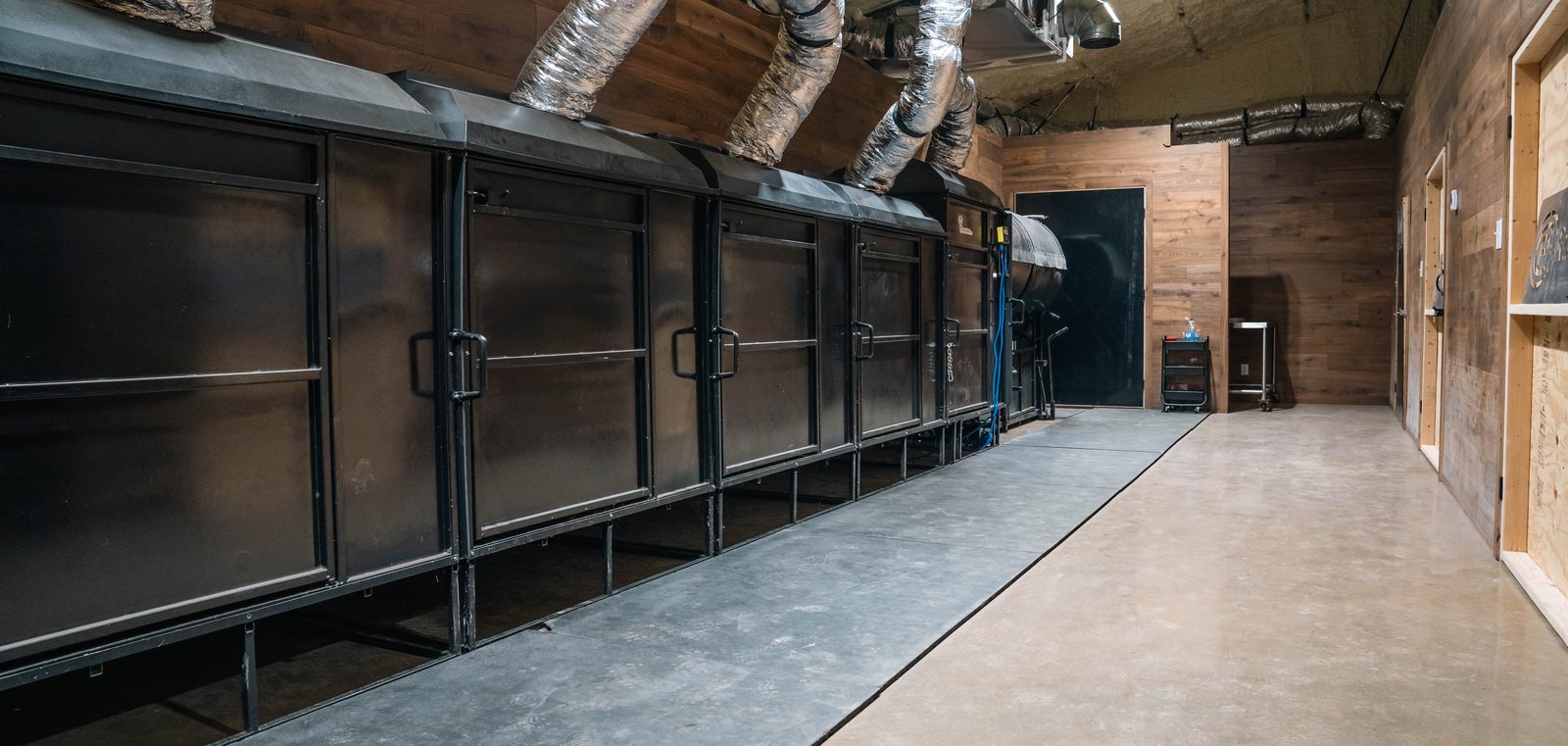
Twenty does boarded for a year is $30,000, and what you get for it is a year you did not lose. Whether that trade makes sense depends on how far out your infrastructure is. Details on the Jumpstart Program page.
What we cannot quote you
Fencing, pens, water and feeders are property-specific and we do not sell them. Permits, release site registration and CWD testing obligations are set by TPWD and TAHC, they change from season to season, and they depend on your situation rather than ours. Confirm those directly — we have written up how the compliance side works on our herd health page, and the rules themselves live with TPWD.
The short version
Stocking a ranch with bred does and a couple of stockers, a serious foundation herd starts in the neighborhood of $40,000 and a substantial one runs $80,000 or more, before fence and feed. The animals are the predictable part of your budget. The infrastructure and the annual feed bill are the parts that surprise people.
If you want to talk through what your specific acreage should carry, call 714-388-7020. If we do not have what fits your goals we will tell you that instead of selling you something else.
 Crown Point Whitetails
Leave a comment