



Score is how this industry talks. It is on every listing, it sets most prices, and it is the first thing anybody asks about an animal. We price our own stocker bucks in three published tiers by score, so we are not about to tell you it is meaningless.
But a score is one number describing a complicated animal at one moment, and there are four or five ways that number can be technically true and still mislead you. Here is what is actually behind it.
What is being measured
A score is a sum of measurements off the rack: the length of each main beam, the length of every scorable tine, circumference measurements taken between tines, and the inside spread. Add it up and you have the gross figure.
That is the whole idea. It is a measure of how much antler is there, and it is genuinely useful for exactly that. What it is not is a description of the deer.
Gross or net
The two figures can differ substantially on the same animal.
Gross adds everything up. Net subtracts deductions for asymmetry — the difference between the left side and the right side. A deer with a heavy, wild, non-typical rack can carry an enormous gross number and net out far lower, because the two sides do not match.
Neither number is dishonest. The pen-raised side of the business generally quotes gross, and for most buyers gross is the more useful figure, because you are buying the antler that is there rather than entering a typical-category competition. The problem is only ever a comparison between a gross figure and a net one, which will make one animal look considerably better than it is.
Ask which one you are looking at. Every time.

The age question, which matters most
A score without an age attached is not information. It is a number.
A buck adds antler through his fourth, fifth and sixth years. So a two-year-old carrying a given score and a six-year-old carrying the same score are entirely different animals with entirely different futures — the young one has most of his growth ahead of him, and the older one is at or past his peak.
| Same score, different age | What you are buying |
|---|---|
| At 2.5 | Considerable growth still to come. Genetics showing early. |
| At 4.5 | A mature deer near his potential. |
| At 6.5 | Peak or just past it. This is close to as big as he gets. |
If a seller quotes you a score and does not volunteer the age, that is the first thing to ask, and how readily it comes tells you something. We can give you a score on any animal we sell — just ask, and ask what age it was taken at.
When was it measured
Antler in velvet measures larger than the same antler after the velvet comes off, and a rack scored in late summer at its absolute peak will read higher than the same deer scored in hard antler.
This is not usually anybody trying to deceive you — velvet is when most pen deer get photographed and measured, because that is when they look their best and when the handling is convenient. But it does mean a velvet figure and a hard-antler figure are not directly comparable, and the animal standing in your pasture in November will not measure what the summer photograph did.
Who did the measuring
Most scores in this business are taken by the people selling the animal. That is normal and it is not a scandal — it is simply worth knowing, because scoring involves judgment calls about which points are scorable and where a circumference gets taken, and reasonable people land in different places.
The practical upshot is that a few inches of difference between two operations means very little, and you should not agonise over it. A gap of thirty or forty inches means something. Judge the animal against other animals from the same seller, and judge the seller on whether the deer look like their numbers when you stand in front of them.
What score does not capture at all
- Character. Two deer at the same score can look nothing alike. One is heavy-massed with a clean typical frame; the other is a pile of stickers and kickers. The tape does not care which one you would want on your wall, and you might.
- What he will produce. A big score means he grew big antler. It does not tell you what he throws, which is a question about his pedigree and his dam line. See how to read a whitetail pedigree.
- Body and soundness. Frame, feet, condition and temperament all matter on a working ranch and none of them are in the number.
- Whether he was fed to it. Nutrition moves score considerably. An animal pushed hard in a pen may not repeat that figure on your browse.
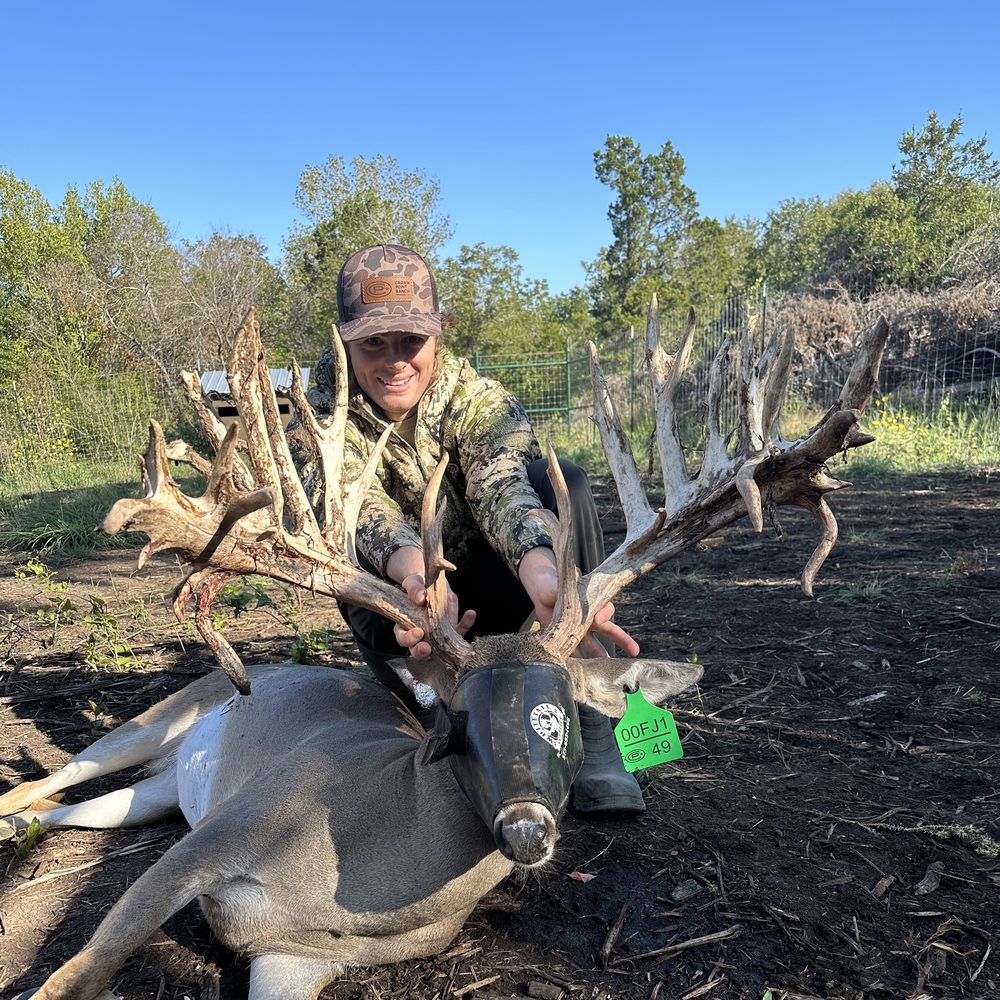
So why do we price by it?
Because it is the best shorthand available, and because publishing tiers by score is more honest than the alternative.
The alternative is what most of this industry does: no published price, a phone call, and a figure that depends on how the seller reads you. Our stockers are $6,500 under 200″, $7,500 from 200″ to 250″, and $8,750 over 250″. Those numbers do not move based on your truck. Score is an imperfect measure, but it is a measure, and a measure you can see beats a negotiation you cannot.
The four questions
Before a score means anything, ask:
- How old was he when that was taken?
- Gross or net?
- Velvet or hard antler, and what date?
- Who measured him?
Four questions, thirty seconds, and the number goes from decoration to information. Any seller worth buying from will answer all four without hesitating. We will.
The short version
Score measures how much antler is on the animal, which is worth knowing and is not the same as how good the animal is. Age matters more than the figure itself. Gross and net are not comparable. Velvet reads high. And nothing on the tape tells you what he will throw — that is the pedigree’s job.
We can provide a score on any deer we sell, and a registered pedigree on every one. See the stocker page for current animals and the results page for what our genetics have produced. Questions about any specific deer, call 714-388-7020.
 Crown Point Whitetails
Leave a comment